
They adorn the tranquil grounds of the Zen Temple.
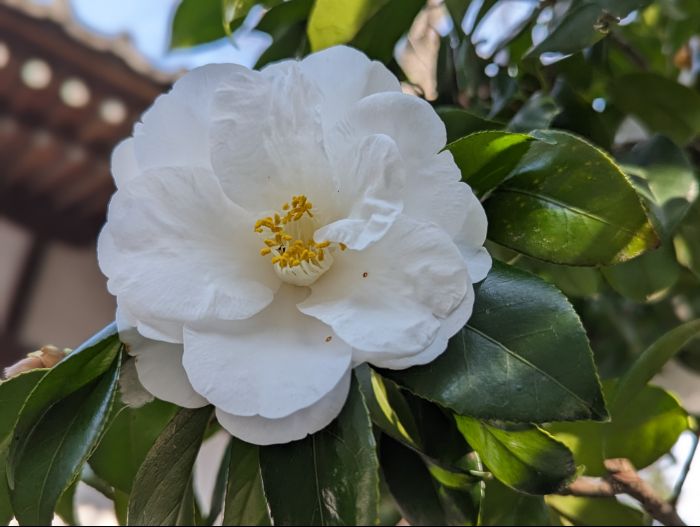
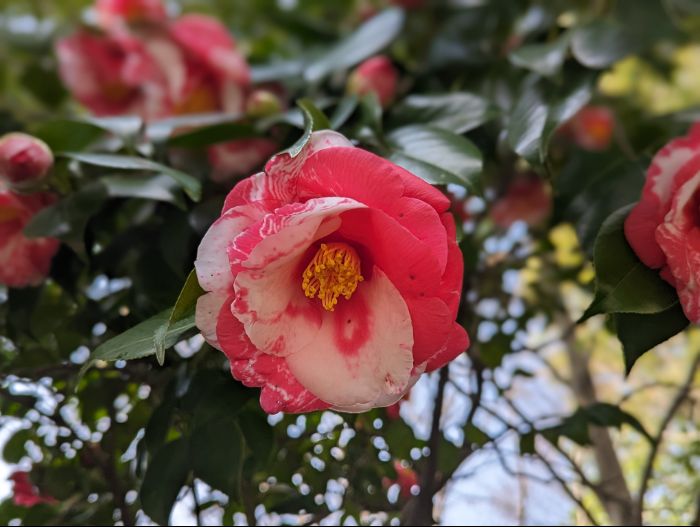
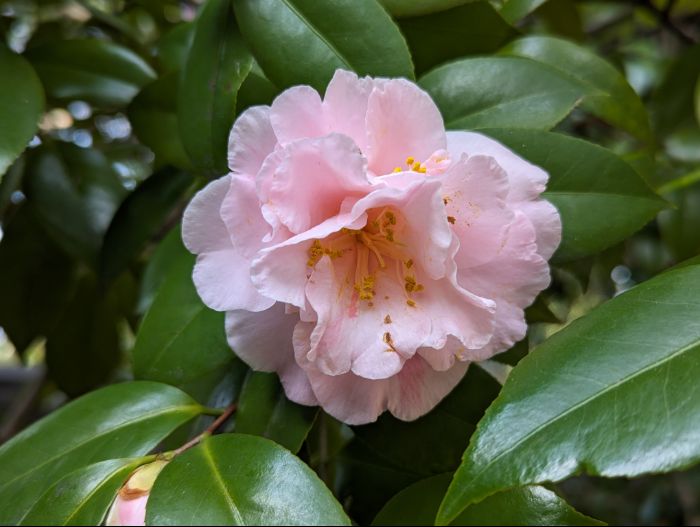
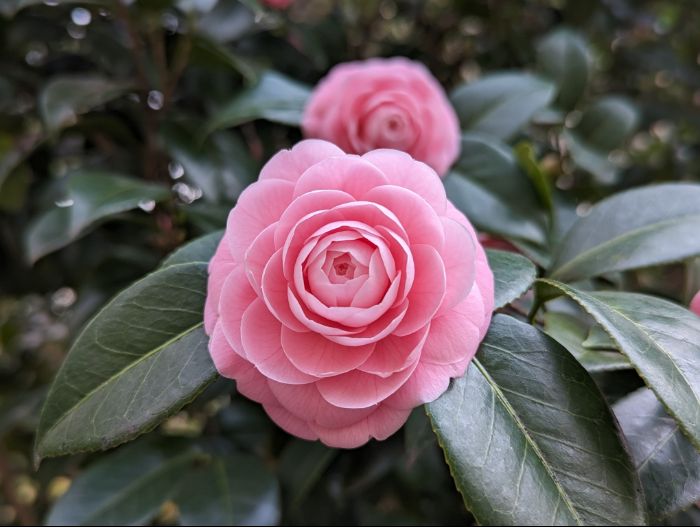
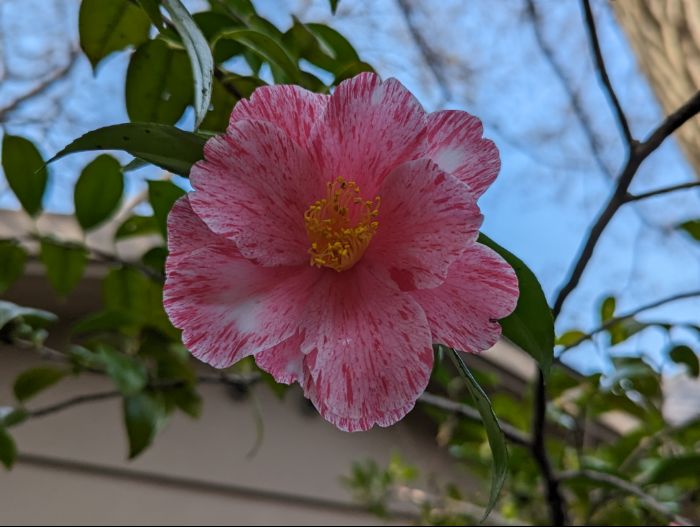
A group of various types of “Tsubaki” or camellias, planted at Kansenji Temple, a Soto sect temple in the northeastern part of NISHIOGI. They are evergreens.
The kanji for ”Tsubaki”(椿) is written with the “tree” (木) radical and the character for “spring” (春). In Zen temples, “camellia” is given the meaning of “spring flower” and is said to be a flowering tree that makes people feel the arrival of spring.
Incidentally, the flower language of Tsubaki is, for example, “modest kindness.”
禅寺の花
静かな禅寺の境内を彩っています。
西荻の北東地区にある、曹洞宗・観泉寺に植栽されている多種の「ツバキ」群。常緑樹。
「椿(ツバキ)」という漢字は、木偏(きへん)に春(はる)と書きます。禅寺では、「ツバキ」は「春の花」という意味が与えられ、春の訪れを感じさせる花木といわれます。
因みに、ツバキの花言葉は、例えば「控えめな優しさ」。

Topics
コメント欄を読み込み中